

Firing up a charcoal grill is one of the best parts of outdoor cooking. Whether it's a quick weeknight dinner or a weekend cookout, charcoal delivers a flavor that gas grills can’t match.
But how you start that fire matters.
Lighter fluid may seem convenient, but it often leads to uneven burns and unwanted flavor. Many grillers now rely on charcoal fire starters to get a cleaner, more controlled ignition from the beginning.
Is Lighter Fluid Bad for You?
Lighter fluid includes volatile organic compounds (VOCs) and hydrocarbons, which can release toxic fumes when burned.
These fumes can irritate the respiratory system and may cause headaches, dizziness, or nausea with repeated exposure. While occasional use may seem harmless, it’s not the cleanest way to start a fire.
How Lighter Fluid Affects Flavor
One of the biggest drawbacks of lighter fluid is how easily it impacts the taste of your food.
Even if you wait for it to burn off, residues can remain on the charcoal. This can create a subtle chemical flavor, especially when cooking foods that sit on the grill longer.
Do You Actually Need Lighter Fluid?
Short answer: no. Charcoal doesn’t require lighter fluid to ignite. In fact, many grills, especially kamado and ceramic setups, specifically advise against using it.
The goal is simple: get charcoal fully lit, evenly, and quickly. That comes down to the ignition method, not chemicals.
Best Alternatives to Lighter Fluid
If you’re moving away from lighter fluid, there are several ways to start a charcoal grill more cleanly and reliably:
Charcoal Fire Starters
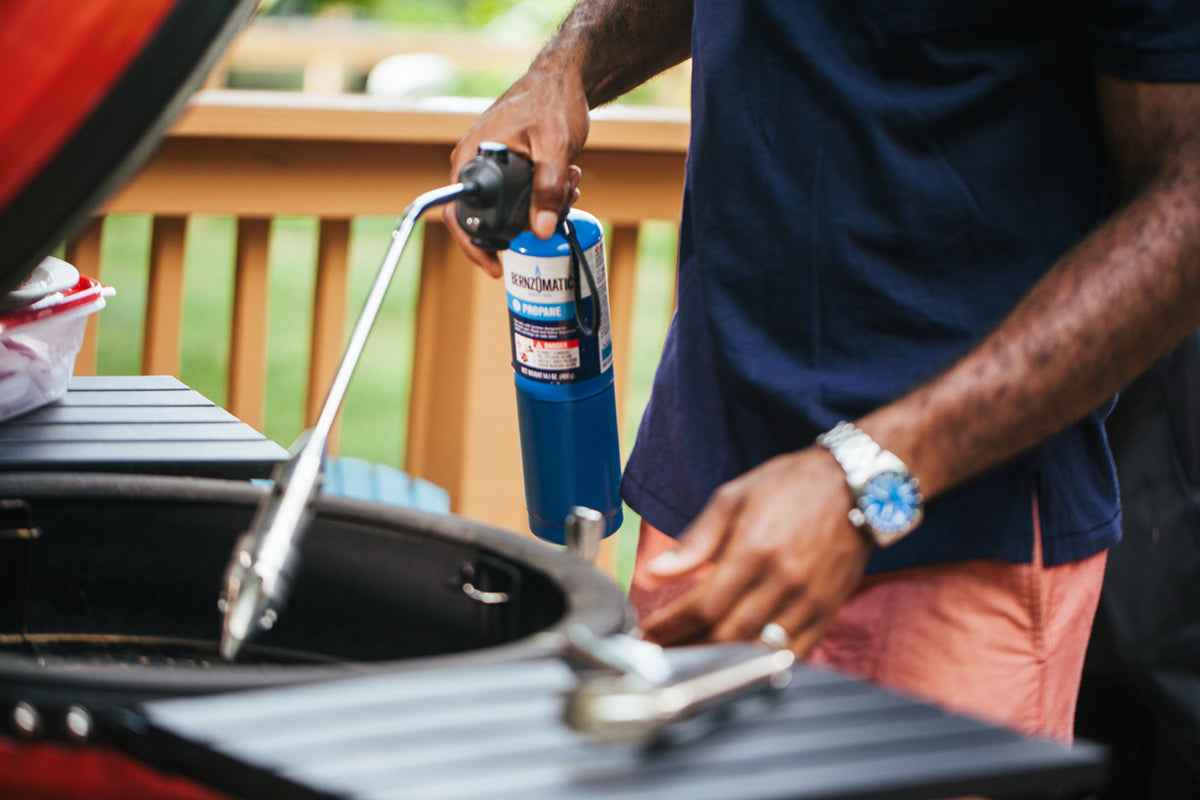
Many grillers rely on charcoal fire starters because they provide direct, controlled heat where it’s needed.
Instead of waiting for coals to slowly catch, a controlled ignition source helps charcoal light faster and more evenly. This results in a hotter, more stable fire from the start.
Tools like the RocketFire™ starter are designed to deliver consistent heat, helping ignite charcoal quickly without relying on lighter fluid.
Charcoal Chimney Starter
A chimney starter uses airflow and a small ignition source, like paper, to light charcoal from the bottom up.
It’s effective, but can take longer and requires more setup than direct ignition methods.
Natural Fire Starters
Natural fire starters, such as wax cubes, wood chips, or paper, offer a chemical-free way to light charcoal.
They’re simple, but performance can vary depending on conditions like wind or moisture. They can also take quite some time to get your grill nice and hot.
Electric Charcoal Starter
Electric starters use direct heat to ignite charcoal and typically work within a few minutes. They’re reliable but require access to power, which can limit their use outdoors.
Why Ignition Method Matters
The main issue with lighter fluid isn’t just the chemicals; it’s the lack of control.
Fluid creates uneven ignition. Some coals burn too fast, while others never fully light. This leads to inconsistent heat and a fire that’s harder to manage.
A controlled ignition method helps to:
- Light charcoal evenly
- Reduce wait time
- Maintain consistent heat
When charcoal is fully ignited from the start, it burns hotter and more predictably.
Final Thoughts
Lighter fluid may seem like a quick fix, but it often leads to inconsistent fires and compromised flavor.
Better alternatives exist, and they don’t require more effort, just a more reliable way to start your fire. Many grillers switch to charcoal fire starters for a faster, cleaner ignition and more consistent results.
The Best Way to Stack Wood In a Fire Pit
Building A Fire Pit In Windy Conditions: Is It A Bad Idea?